

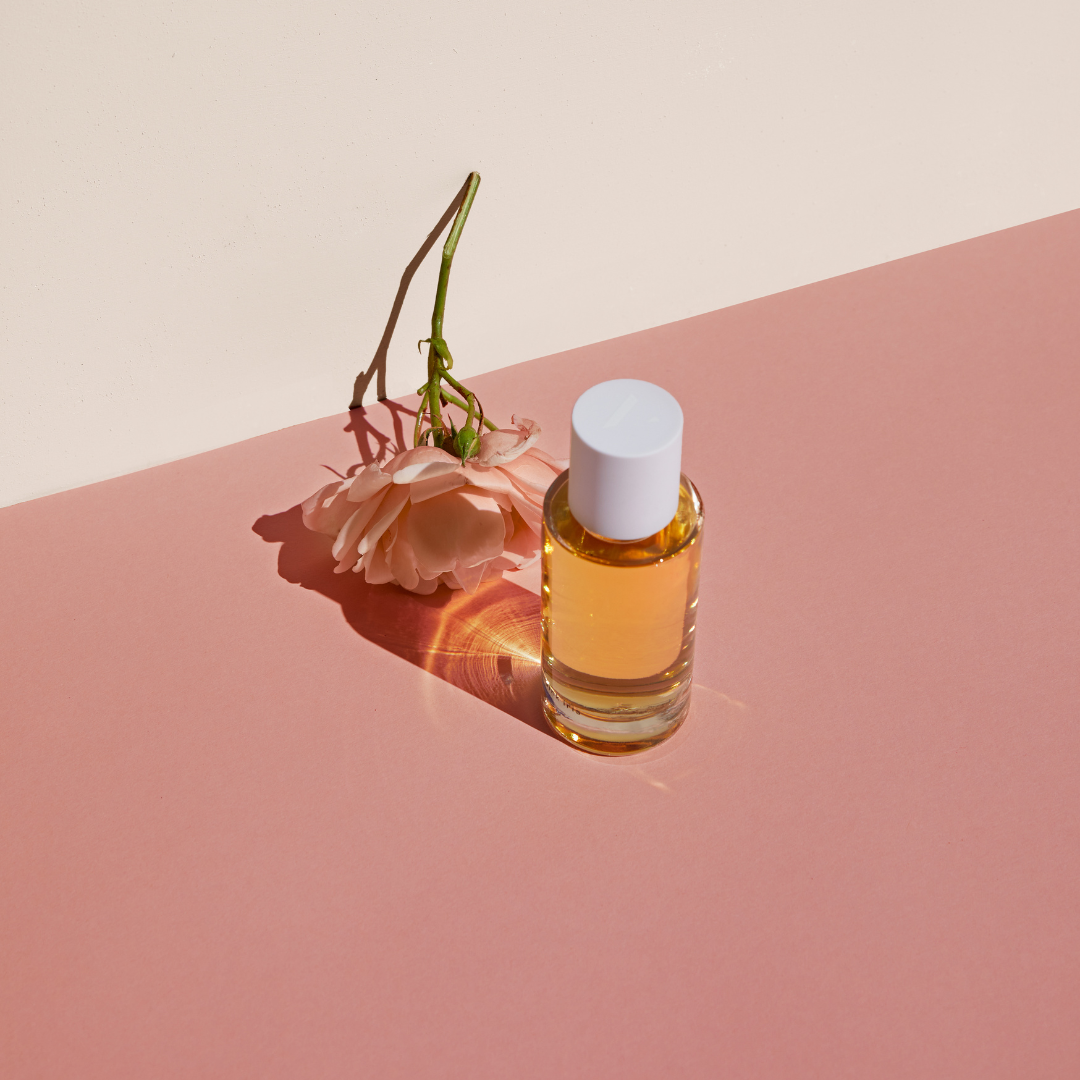
Eau de toilette, eau de parfum, extrait de parfum: what is the difference, and which should you choose? Here is how to find your way, with our tips for making a fragrance last longer.
What sets fragrance types apart
Fragrance types differ mainly in their concentration of aromatic compounds, diluted in alcohol. The higher the concentration, the more intense the fragrance and the longer it lasts. The composition matters too: fresh notes such as citrus are made of light molecules that evaporate quickly, while richer notes such as amber or vanilla have heavier, less volatile molecules.
Eau de toilette
Fresher and richer in top notes, it evolves little on the skin and its staying power is light. It generally contains between 5 and 15% concentrate. It can be worn on its own or alongside an eau de parfum.
Eau de parfum
One of the most widespread concentrations, it is a good compromise between eau de toilette and extrait. With 10 to 20% concentrate, it develops on the skin, moving gradually from top notes to heart notes and then base notes, depending on body temperature and skin pH.

To discover: the eaux de parfum from Abel, formulated exclusively with natural ingredients, and those from Bastille, a French fragrance house.
Extrait de parfum
This is the most concentrated form, generally with 20 to 40% concentrate. Heart and base notes are particularly intense: an extrait develops like an eau de parfum, but with more depth, sillage and staying power.
To discover: the alcohol-free extraits de parfum from Versatile.

How to make your fragrance last longer
- On moisturised skin: scent molecules cling better to well-hydrated skin, so the fragrance lasts longer.
- On pulse points: the warmth of the skin helps the fragrance diffuse. Pulse points are the inner wrists and elbows, behind the ears, the hairline, the base of the neck and the décolleté.
- Without rubbing: friction warms the skin and alters how the fragrance develops, particularly the top and heart notes as well as the dry-down, the longest phase of diffusion. Apply your fragrance and let it evolve. This tip does not apply to alcohol-free extraits such as Versatile's.
Explore our full selection of natural fragrances.
Emilie Engel